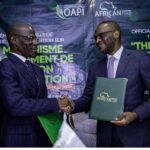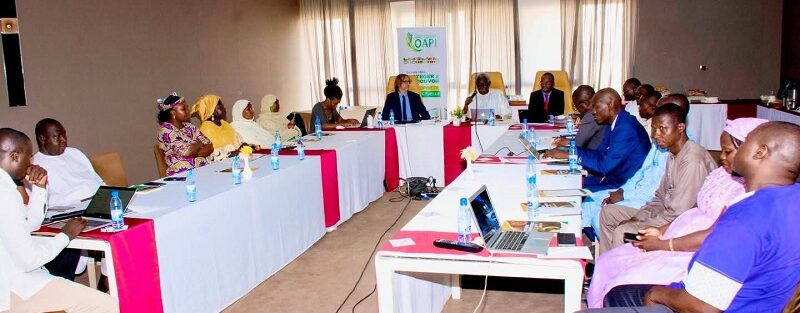
The workshop for reviewing and validating the studies carried out as part of the support for the process of registering geographical indications (GIs) in Chad opened this Tuesday, May 13, 2025 in N'Djamena.
The meeting, which is a joint organisation of OAPI and the Intellectual Property Rights in Africa (AfripI) project with the support of the government of the Republic of Chad, was held in favour of the producers of spirulina from Chad or Dihé in the local language and the National Committee of GIs, with a view to finalising the process of supporting Dihé to the registration as a Protected Geographical Indication (PGI) at OAPI.
The launch of the work took place with speeches by the Deputy Head of the AfriPI project Carlos LLEO SATORRE and the Representative of the Director General of OAPI, Michel GONOMY – Head of the Project to Support the Implementation of Geographical Indications (PAMPIG) following which, an opening speech was given by the Coordinator of the National Liaison Structure of Chad, Chérif ABDALLA.
A dynamic development of GIs is underway
In order to deploy an effective recognition and exploitation strategy under the PGI label, the discussions between the various stakeholders aimed to:
• To enable members of the Chadian Association for the Protection, Promotion and Development of Dihé to familiarize themselves with the tools necessary for the process of registering their product as a PGI;
• To provide the Committee in charge of GIs in Chad with the results obtained at the end of the registration process; which will be used to validate the specifications and the control plan for this pilot product in the region.
• To educate the said Committee on the missions incumbent upon them with regard to the registration procedure with OAPI, the management and the sustainability of the PGI.
In its desire to support each member state in the recognition of at least one emblematic product of its terroir as a PGI, through this GI approach, OAPI stands alongside the Chadian authorities to build a governance model integrating the valorization of Dihé as an asset for economic development.